




Game info
Construction, Physics puzzle, Sandbox
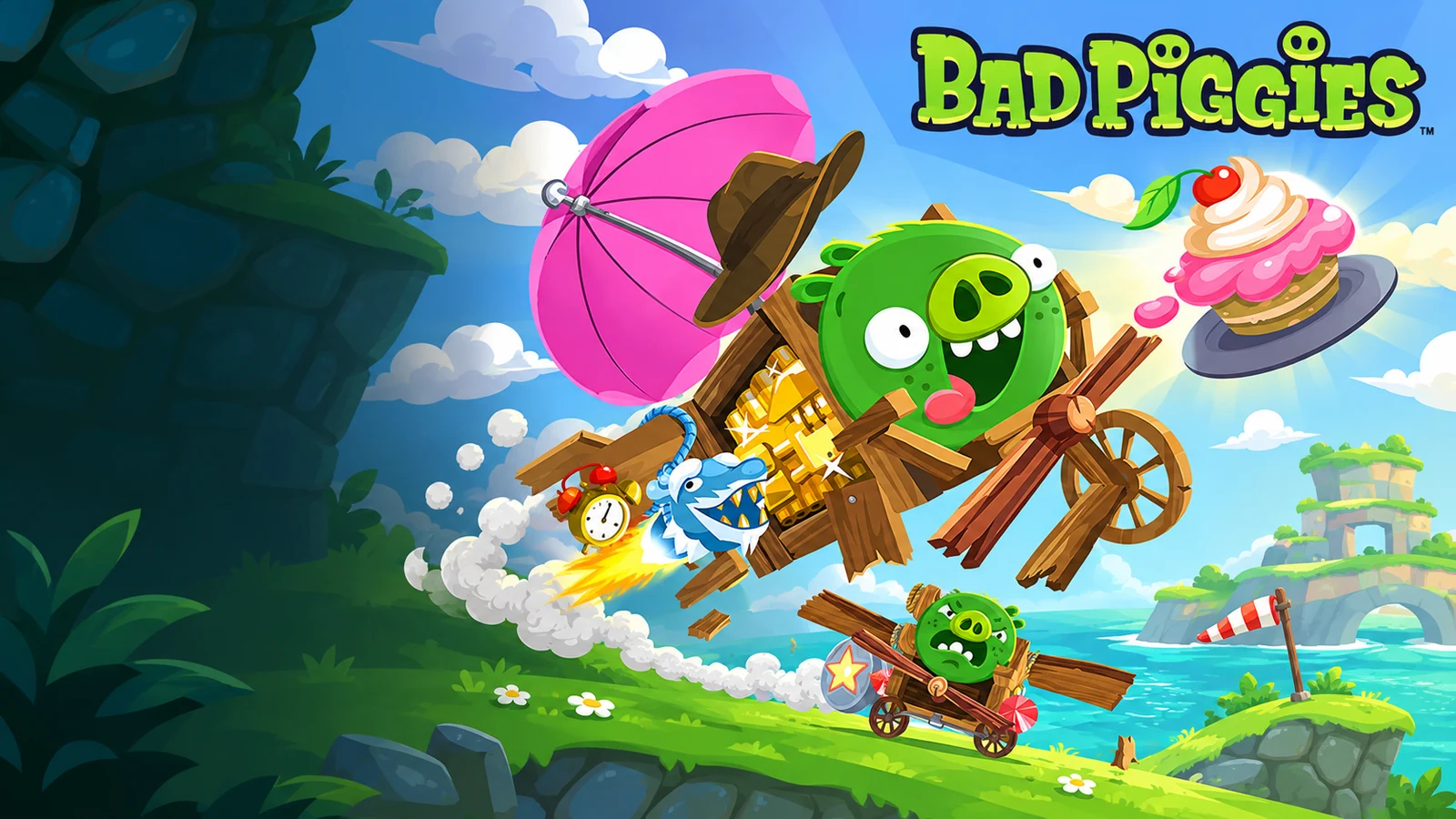
Bad Piggies turns the Angry Birds world into a building challenge. Instead of launching birds, players assemble a contraption and test whether it can carry a pig across a route without falling apart.
About Bad Piggies
Bad Piggies turns the Angry Birds world into a building challenge. Instead of launching birds, players assemble a contraption and test whether it can carry a pig across a route without falling apart.

Gameplay overview
Inspect the route, place the available components, start the machine and observe what goes wrong. Wheels, propulsion and the position of weight affect the result. A failed attempt supplies useful information when the next build changes a specific cause.
How to Play
Start with the simplest vehicle that can reach the first obstacle. If the front catches on the ground, change its shape or wheel position before adding more power. If the machine tips, consider weight distribution. Add one component at a time so you can see whether it improves stability, clearance or propulsion.
Controls
drag parts into the construction area and activate the available controls during a run.
Pro Tips
- Study the terrain before building.
- Change one mechanical problem per test.
- Use balanced weight rather than adding random parts.
- Separate construction chapters from racing or action spin-offs.
Making Better Decisions
A useful test answers one mechanical question. If the vehicle cannot climb, decide whether the problem is wheel contact, weight, ground clearance or insufficient propulsion. Adding a random part changes several variables and can hide the cause. Build a simple frame, test it, then improve the specific failure. Watch what happens immediately before a crash: a front edge catching the ground suggests a different fix from a cart tipping after a jump. If the level provides special parts, learn what each control activates before combining them in a complex machine. A stable route to the finish can be established before chasing optional objectives. Browser chapters and mobile releases may provide different parts, so a build recipe must name the edition it was tested in.
Features, Modes and Progression
Rovio’s official release and browser games called HD 2, Car or 2016 may have different parts and levels. The source-listed title is retained instead of treating every pig-themed game as the same build.
Build for the part of the route that fails
A contraption can move successfully from the start and still be poorly suited to the next obstacle. Watch where the design loses stability or stops making progress. Change the component or arrangement responsible for that point before rebuilding everything. A small experiment gives clearer information than a completely new machine whose strengths and weaknesses are both unfamiliar.
Change one design variable at a time
Try a different position, balance or method of movement while keeping the rest of the construction steady. Compare the result with the previous attempt. If the vehicle fails earlier, that is still useful evidence about what the original component was doing. Read the selected stage’s objective before deciding that merely reaching a visible area completes the task.
The pigs become builders rather than slingshot targets
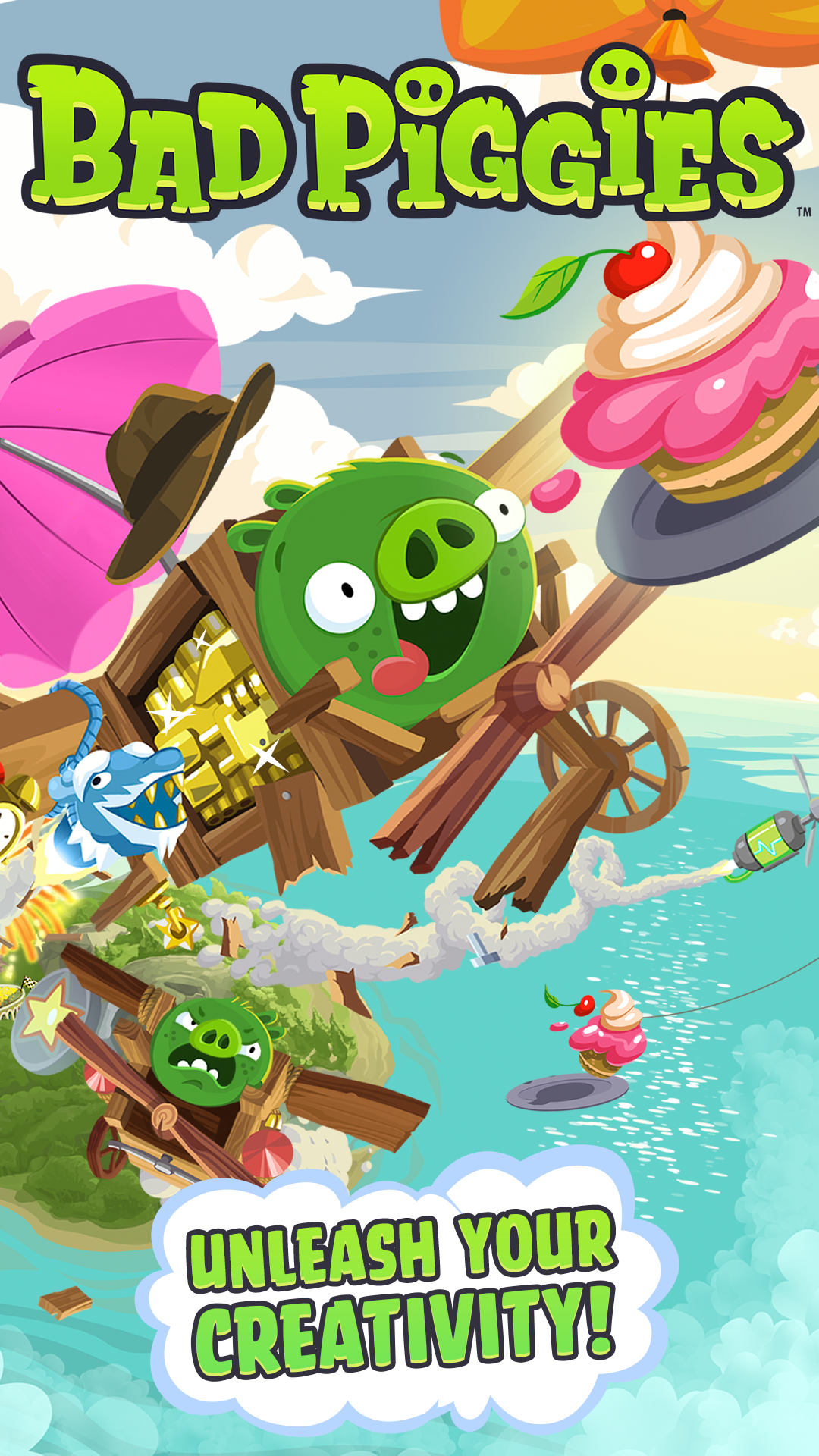
Bad Piggies uses the green pigs in a different role from Angry Birds. The player builds a makeshift device from the parts available in the stage and tries to get the pig to the destination. The puzzle lies in converting those pieces into a machine whose movement fits the route. A construction that looks elaborate can still fail at the first slope, while a simpler balanced device can do the required job.
Rolling, flying and other forms of movement give the original product its variety. Read the available components and terrain before choosing the form of the design. A vehicle suited to ground contact may need a different solution for a gap or a landing. Each change should address a part of the route you actually observed.
Components, activation and a test you can understand
A stage can give the same set of parts several possible arrangements. Their position affects balance and how movement is applied. When an active component is available, its timing adds another decision. Test the design in a way that reveals which part is contributing to which result rather than triggering every effect immediately.
The construction process is the point of the game, so an unsuccessful machine can still be useful. Observe where it first stops doing the intended job. Preserve the parts that already work and change the placement or action connected to the failure. That approach turns a humorous crash into a practical design lesson and gives the next test a clear reason to be different.
Build for the terrain, not only for movement
Bad Piggies is a construction puzzle where reaching the route is only the beginning of the design problem. Look at the first slope, gap or landing before placing the available parts. A contraption that travels successfully across flat ground may be poorly suited to the next section. Decide what the machine needs to do at the difficult point rather than simply making it move from the start.
The available components are constraints to think with. Their positions can change balance, contact with the ground and the direction of movement. Start with a design whose purpose you can explain. If a part is included only because there is an empty space, it may make the test harder to interpret without helping the route.
Balance and the first useful test
Watch how the contraption behaves immediately after launch. Does it remain stable, tip forward or struggle to make progress? Those observations describe different design problems. Change the part or placement connected to the behaviour you actually see. Rebuilding everything after one failure removes the useful comparison with the first design.
Try to keep one test variable clear. Move a component, alter the balance or change a propulsion choice while leaving the other parts familiar. A design that fails earlier still gives information about what the previous arrangement was doing. The point of the test is to understand the machine, not to make every new version look more complicated.
Propulsion needs a moment and a direction
When the game gives you a component that can be activated, consider when its effect is useful. Starting every effect immediately can send the contraption into terrain it is not ready to cross. Read the current stage's controls and notice how the machine is positioned before activating another part.
Connect the action to a specific task: leaving a platform, maintaining movement on a slope or controlling a landing. The result can then tell you whether the timing or the construction needs adjustment. A machine that reaches the right place with the wrong balance may need a different design rather than more propulsion.
Optional targets and a route that can finish
Reaching the destination and collecting an optional target can require different designs. First understand what completes the stage. Once that route is workable, use it as a reference when experimenting with another objective. Trying to solve every optional challenge immediately can hide a simple dependable way through the level.
Inspect where a failed attempt stops. A machine that completes most of the route has already solved several useful problems. Keep those successful parts in mind and focus the next change on the remaining obstacle. The best-looking design is not necessarily the one whose movement fits the terrain most clearly.
Official Bad Piggies information and more physics puzzles
Rovio's Bad Piggies page identifies the original construction game. The official store buttons below provide the published mobile destinations. Use current stage information for available parts and objectives; another physics game may use similar objects with different behaviour.
Bad Piggies is rewarding when a failed machine becomes an explanation you can use. A wheel placement, a better-balanced frame or a more deliberate activation can turn the same set of parts into a successful route. Related building and physics puzzles offer other materials to test, but the useful habit remains: make a design for a reason, observe where it fails and change the part responsible.
Worked example: a machine that works until the first slope
Suppose a contraption travels across flat ground but tips when it reaches a hill. The test has already shown that basic movement works. Preserve that useful part while examining balance, contact with the ground and the arrangement of the components. A change aimed at the tipping point is easier to judge than replacing every part after one unsuccessful run.
Try moving one component or changing one support while keeping the rest of the design familiar. If the next version fails earlier, compare what the original placement was contributing. A failed experiment is still useful when it isolates a design decision. The machine becomes understandable through those comparisons rather than through the number of parts attached to it.
Worked example: enough force, but the wrong timing
A propulsion component can create movement without applying it at the useful moment. Inspect the position before activation and connect the effect to a particular gap, slope or landing. If every available action is triggered immediately, the resulting motion can be difficult to interpret. A deliberate sequence reveals which component is helping with which part of the route.
Read the stage's completion and optional targets separately. A machine that reliably reaches the destination is a useful reference for a later collection challenge. Trying to solve all objectives with the first design may hide a simple successful route. Build one requirement clearly before adding another constraint.
Observe the result before changing the design
Watch where the machine first loses stability or progress. The final wreck is less informative than that earlier moment. On a touch screen, use a view where component positions and attachment points remain distinct. Confirm any activation controls before launching. Bad Piggies-style construction is satisfying when a test produces an explanation you can use: a shifted part, a more stable frame or a better-timed action changes the same route for a clear reason.
Related games
Frequently asked questions
Why does more power make my vehicle worse?
Extra thrust can amplify an imbalance or launch the machine into a bad landing.
What should I change after a failed test?
Identify whether the cause was balance, ground clearance, traction or propulsion, then change the relevant part.
Who develops or publishes Bad Piggies?
Rovio Entertainment Oy
Which controls should I use?
Native: drag parts into the construction area and activate the available controls during a run. Flash/browser adaptations have their own build and test controls.
Is it free?
The observed Google Play listing is free to download and offers in-app purchases. A browser alternative has its own provider terms and may include adverts.
Can I use my official account or saved progress in a browser alternative?
No account, purchase or save transfer is established unless the developer explicitly documents it for that build.
What games should I try next?
Compare Bad Piggies, build vehicle, contraption puzzle, physics construction. The related list prioritises shared mechanics and preserves each game’s real identity.

Good game? Tell us.0
Share a tip, celebrate a high score, or tell us what you think. Keep it friendly.